The complete GEX-based trading analytics suite for ES and NQ.
Know where the gamma walls are, which way dealers are leaning, and which levels are likely to hold, with a guide that walks you through every session. Available in the built-in terminal or right on your own trading platform. All for $9.99 a month.
Free demo: the same interface, with data three days behind. No credit card.
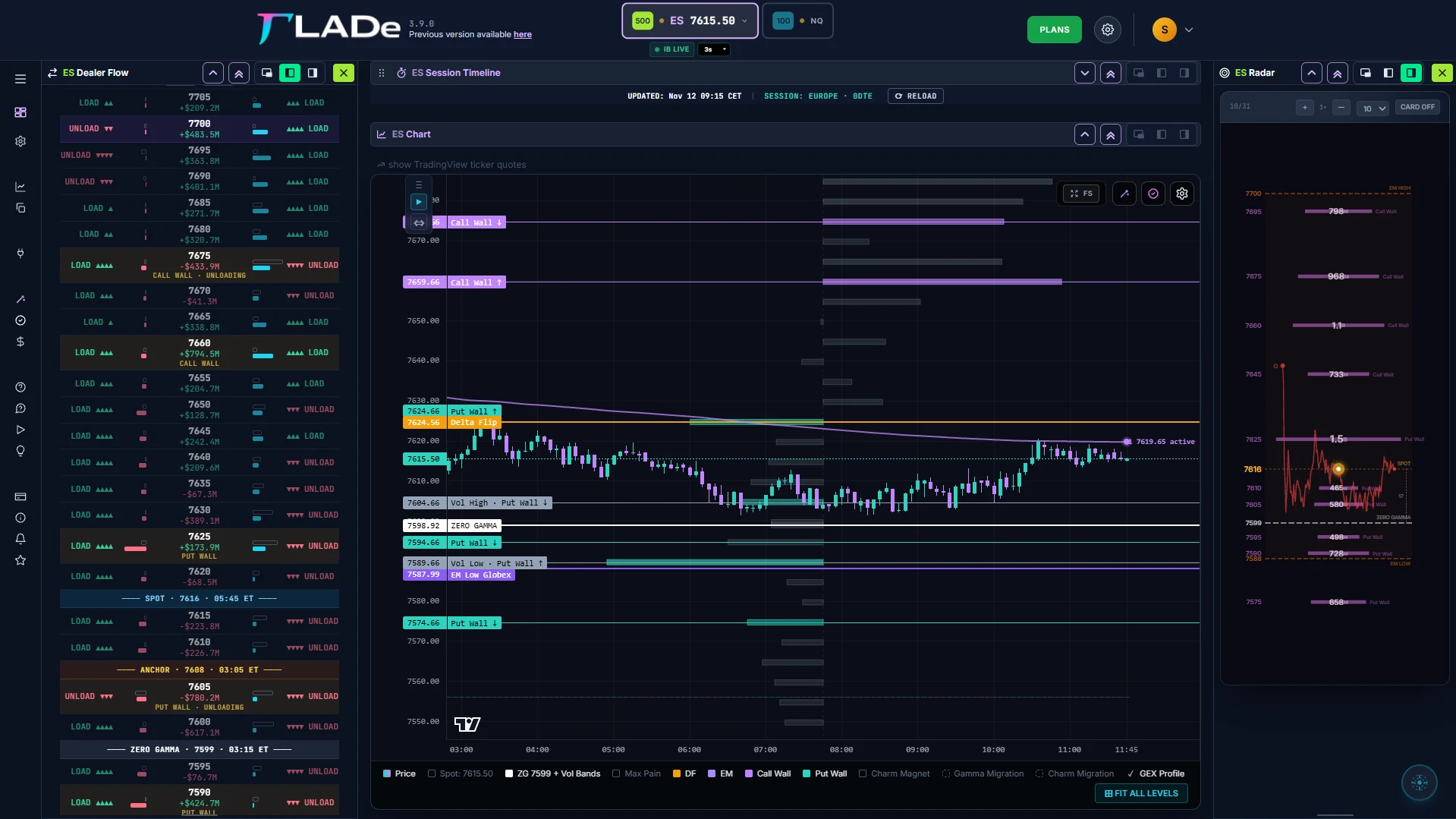
Beyond GEX. Market structure as you've never seen before.
TLADe's Quantum Engine shows you the gravitational structure behind Gamma Exposure bars — where dealers are forced to act, where price gets stuck, and where it accelerates through empty space. It's all about Walls, Magnets and Probabilities.
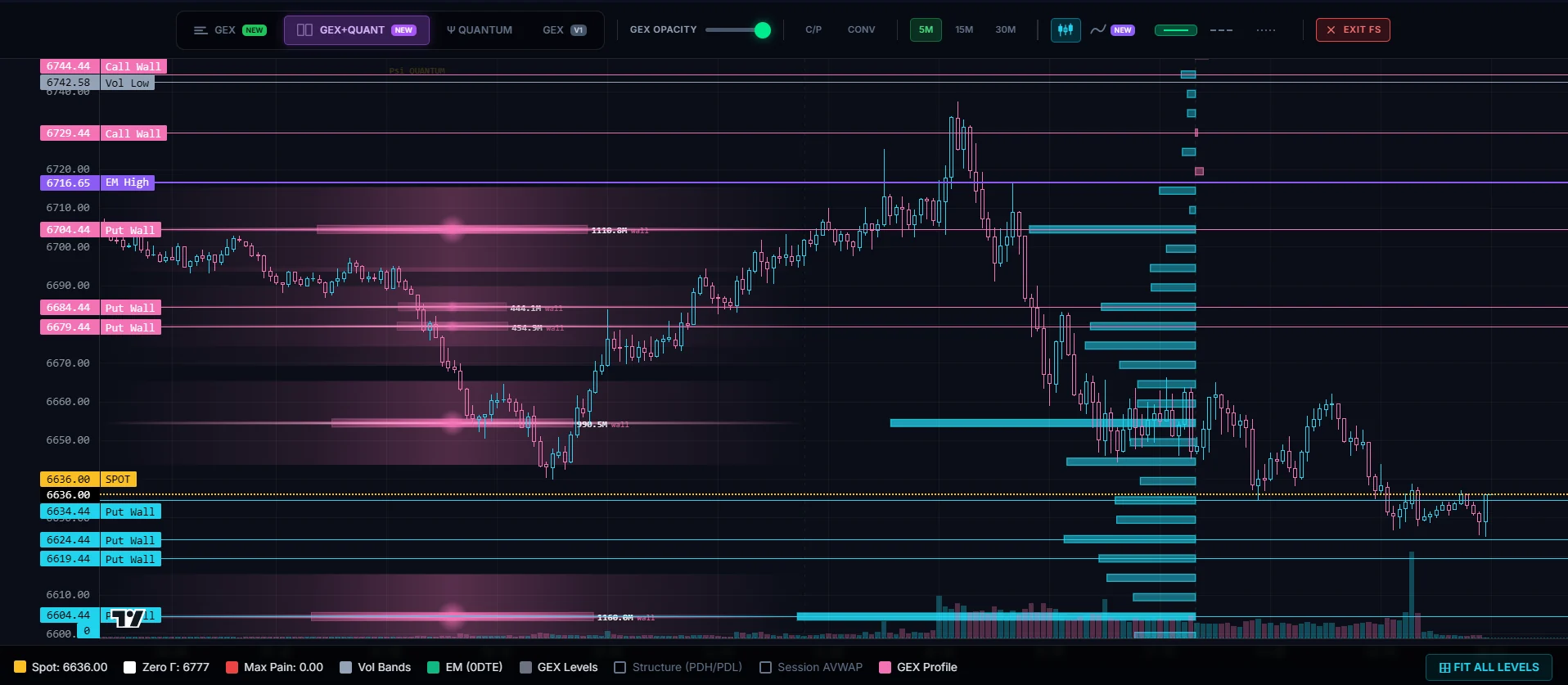
Quantum Engine
The field layer. Every strike becomes a quantum node with mass, charge, and gravitational influence. Walls repel. Magnets attract. Fast Lanes accelerate. The invisible physics that explains why price reacts where it does — not just where.
GEX Classic
The raw engine. Call/put ratio, convexity, hold/break probabilities. Every key level scored from mass, distance, and regime context. Zero Gamma, Vol Bands, PDH/PDL cross-referenced to surface the levels that truly matter.
Immersive topographic view.
Every level as a gravitational node. Mass, field width, force vectors, hold/break probability — all in one topographic view.
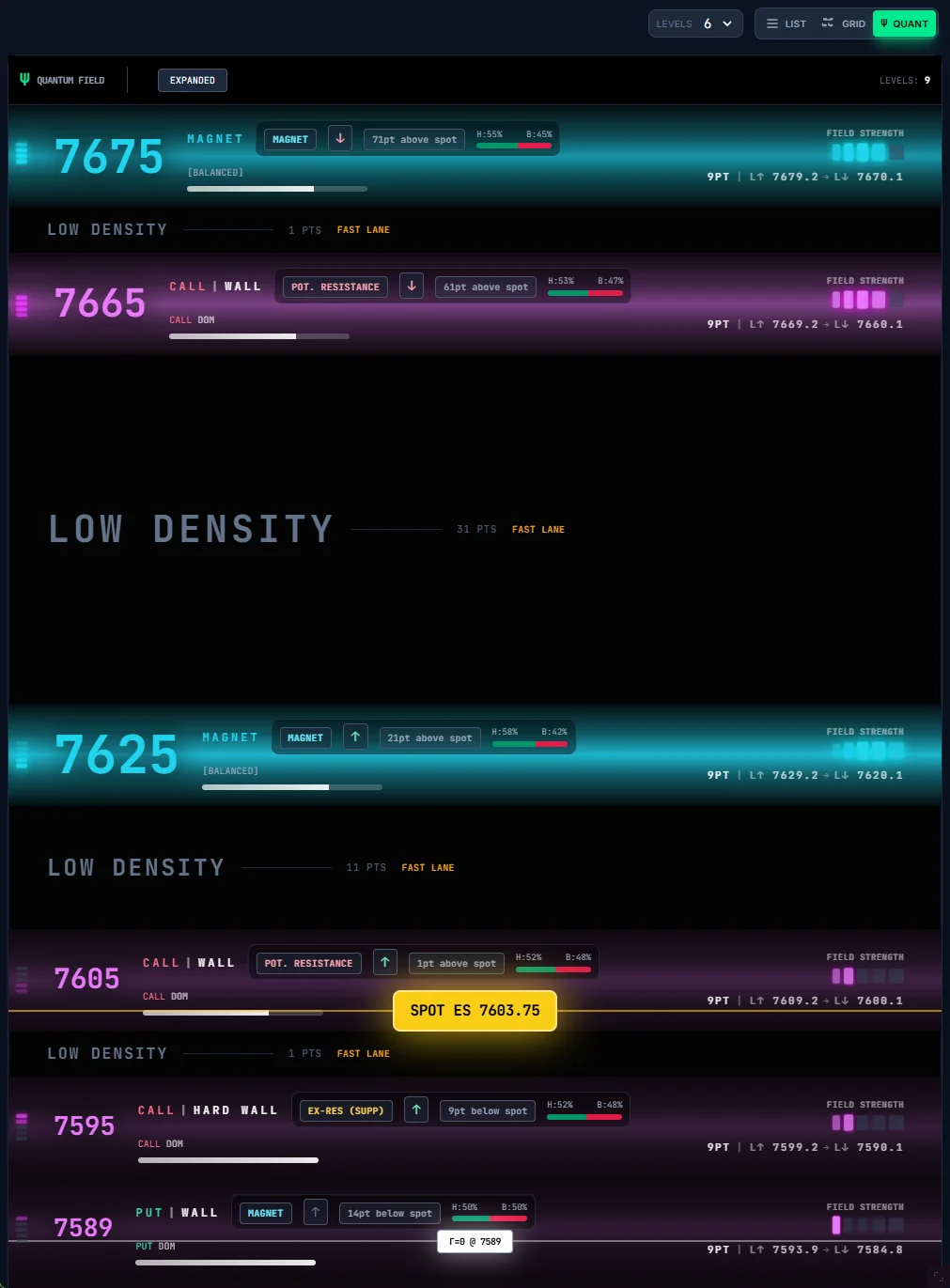
Every level, scored.
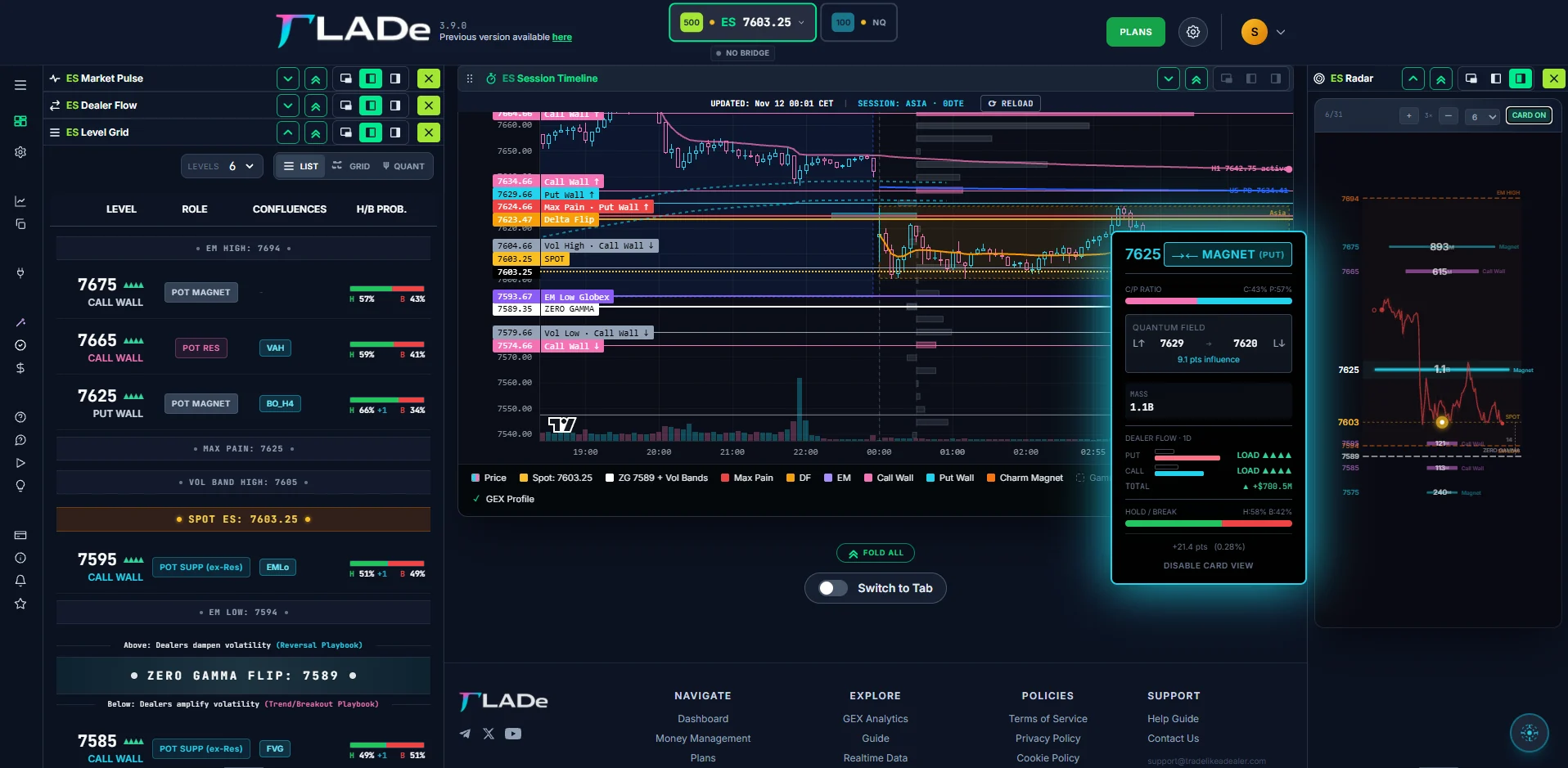
Walls and magnets in price order, with spot, Zero Gamma, the expected move and the vol bands in between: the role of each level, its confluences, its convexity and its hold/break probability.
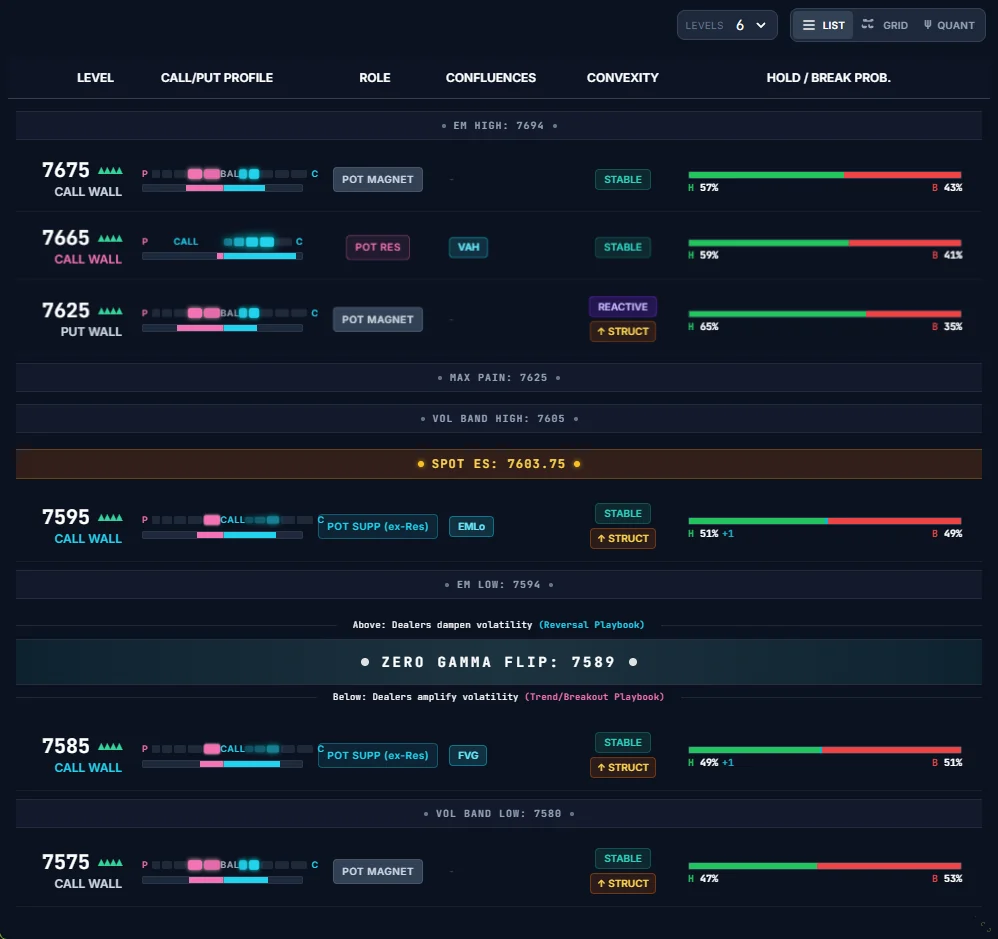
Key levels in action.
Use the structure to validate your strategy and uplift your edge. TLADe integrates key structural markers — VAL/VAH/POC, PDH/PDL, session boxes, and more — to detect confluences with support & demand zones and liquidity pools. Whatever your methodology — ICT, SMC, order flow, price action — cross your setups with the real market structure.
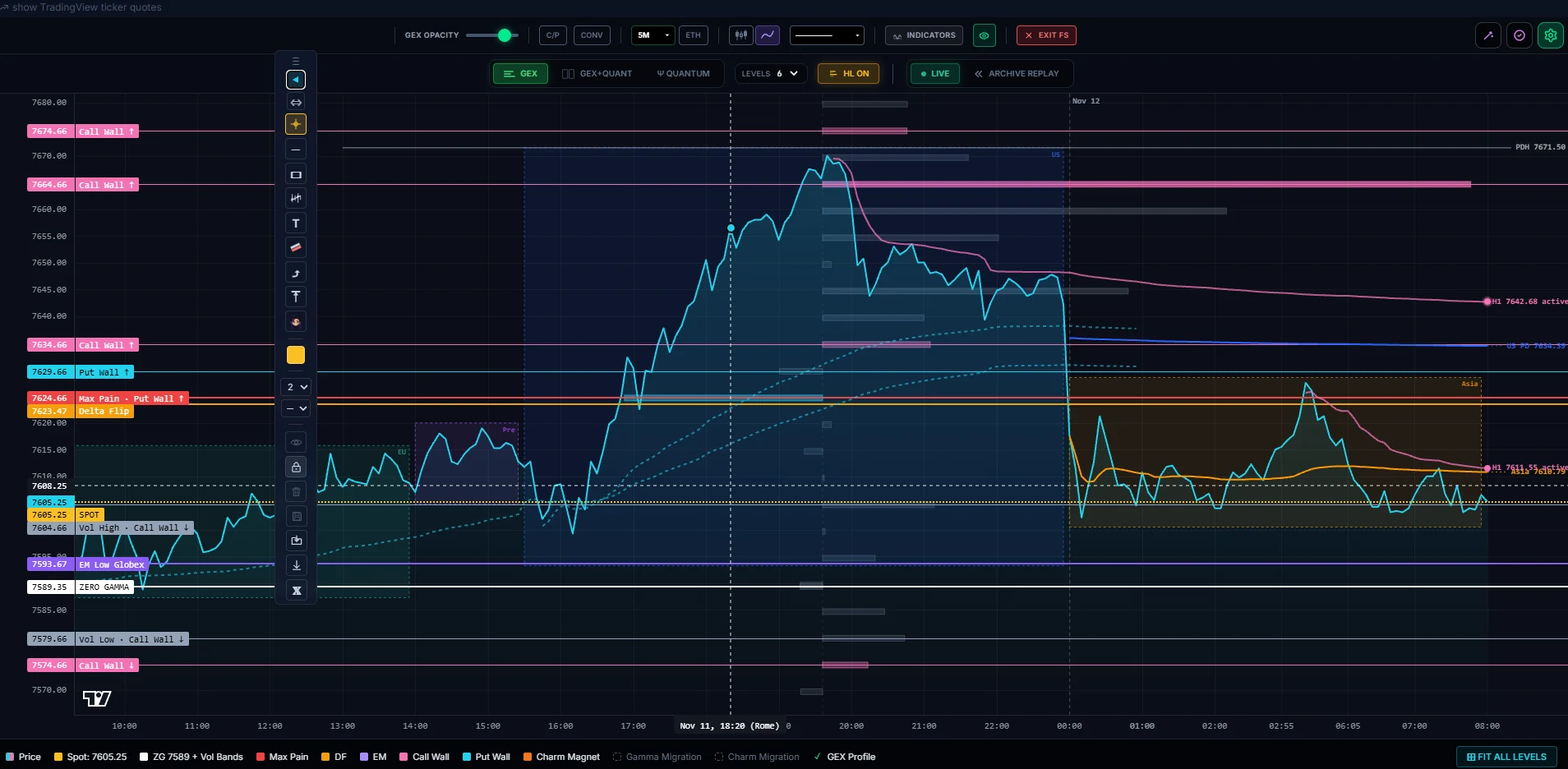
Market Pulse.
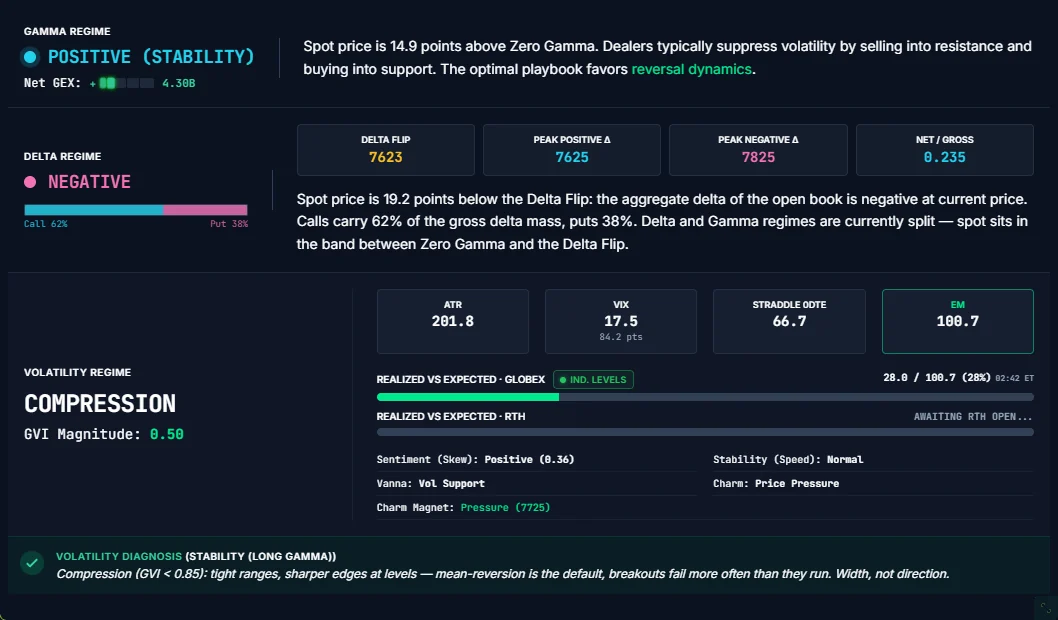
Real-time gamma regime detection, volatility diagnostics, and greek flow analysis — synthesized into one actionable panel. Know instantly whether dealers are dampening or amplifying price action, how much range has been consumed, and where charm pressure is pulling the market.
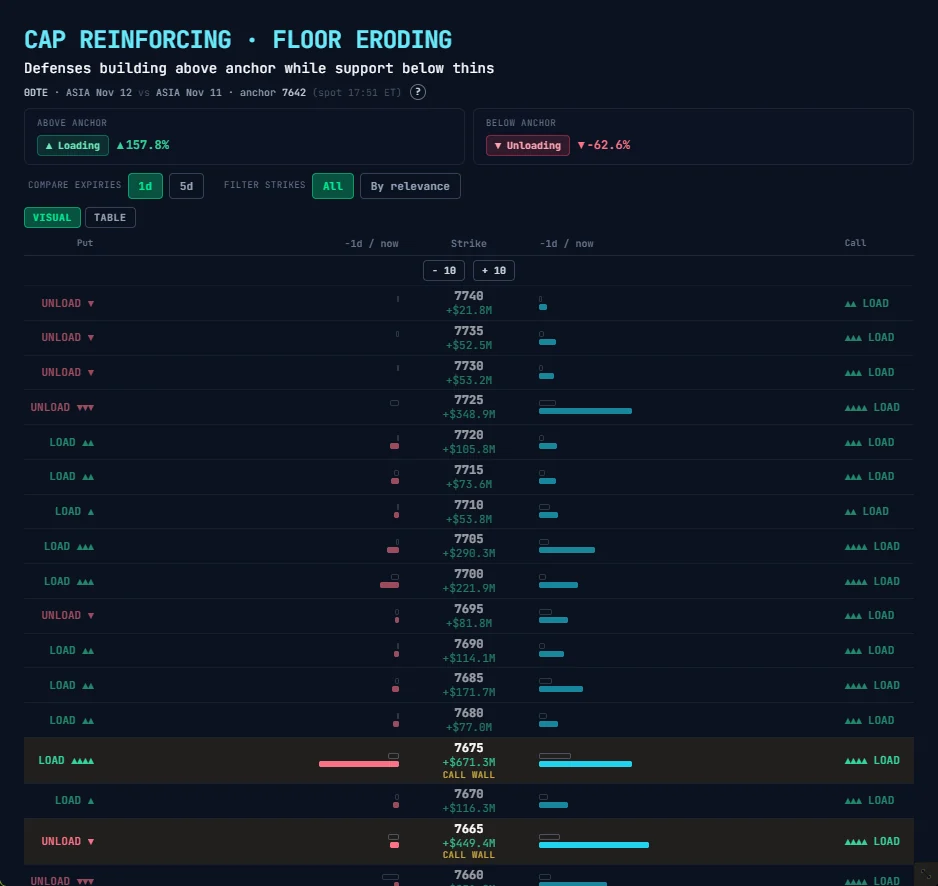
Dealer Flow.
See exactly where dealers are loading or unloading gamma — overnight (1d) and across the week (5d). Reading where call walls reinforce while put walls erode (or vice-versa) reveals the institutional bias before price confirms it: a direct read on market confidence to ground your own.
- Intraday trajectory: how each strike moved session by session
- Visual or table view
6 engines. One clear vision.
Every strike is processed through six independent analytical engines, then cross-referenced through a shared memory layer.
Session-based updates. Not noise: catalysts.
Each session captures a structural snapshot at key market moments. Why session-based? A strategic choice: real-time tick data creates noise. Sessions capture the structural moments that matter, the catalysts where options positioning actually shifts. Each update is a fresh reading of the gravitational field.
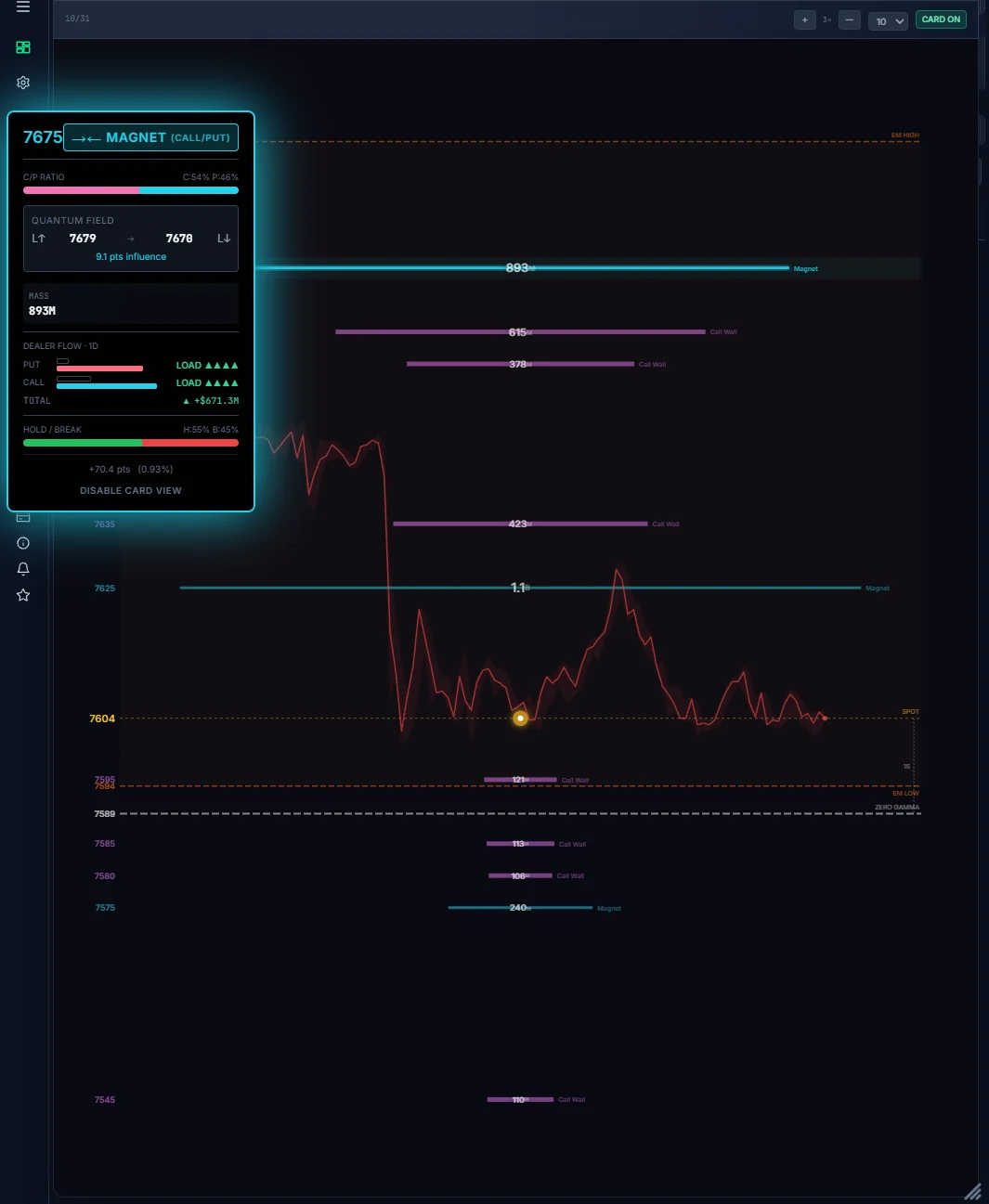
The full gravitational picture. At a glance.
Field Radar overlays GEX bars with the live price path — giving you an instant read of how price is navigating the gamma field. Walls, Magnets, Fast Lanes, Zero Gamma, Expected Move: the entire structural landscape in one compact view. Built for traders who need context, not clutter.
Session Replay.
Open any archived session and step through it bar by bar. The session timeline advances in real time: Asia, Europe, US open, RTH, opening range, power hour. Replay puts you in front of the market, observing how price reacts at structural levels rather than passively receiving concepts. Learning by watching, at your own pace.
 Your guide
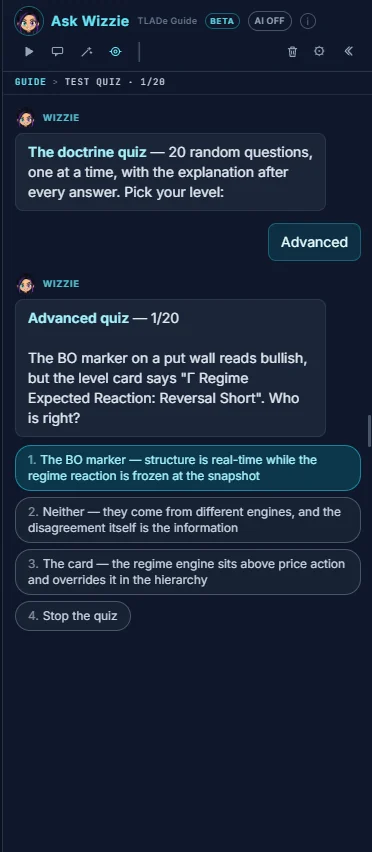
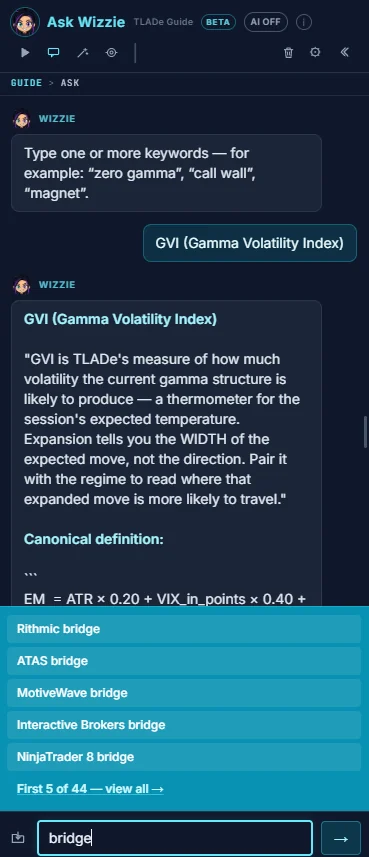
Meet Wizzie. She reads the session with you.

A step-by-step read of the live snapshot.
Wizzie lives on the left rail of the terminal: gamma regime, delta, volatility, dealer flow, the Radar levels. Every number comes from the engine; nothing is invented, and no AI is needed.
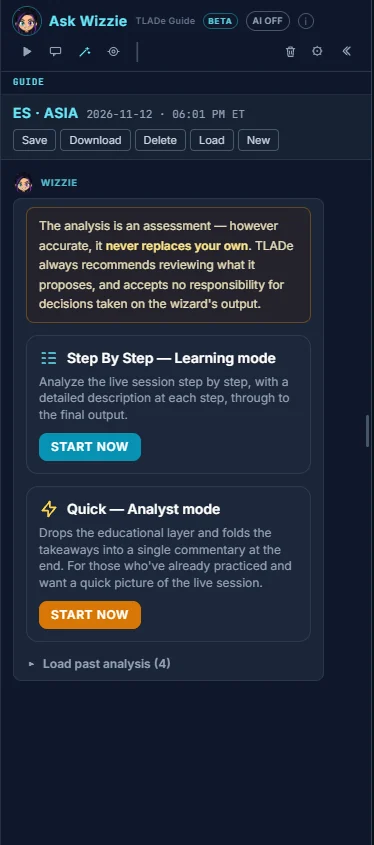
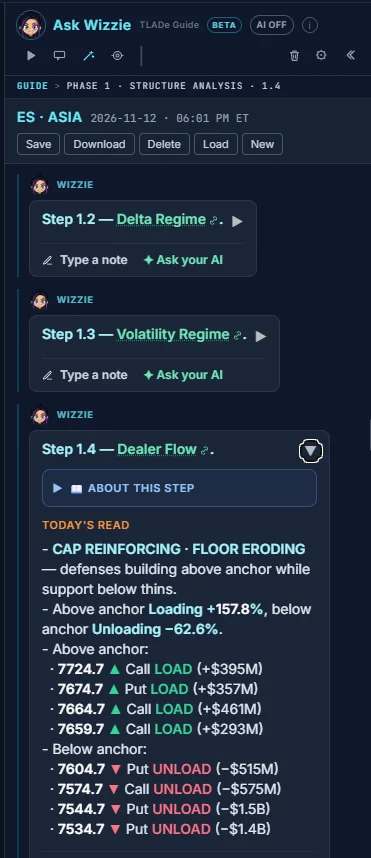
The engine’s read of the session, loaded on your chart.
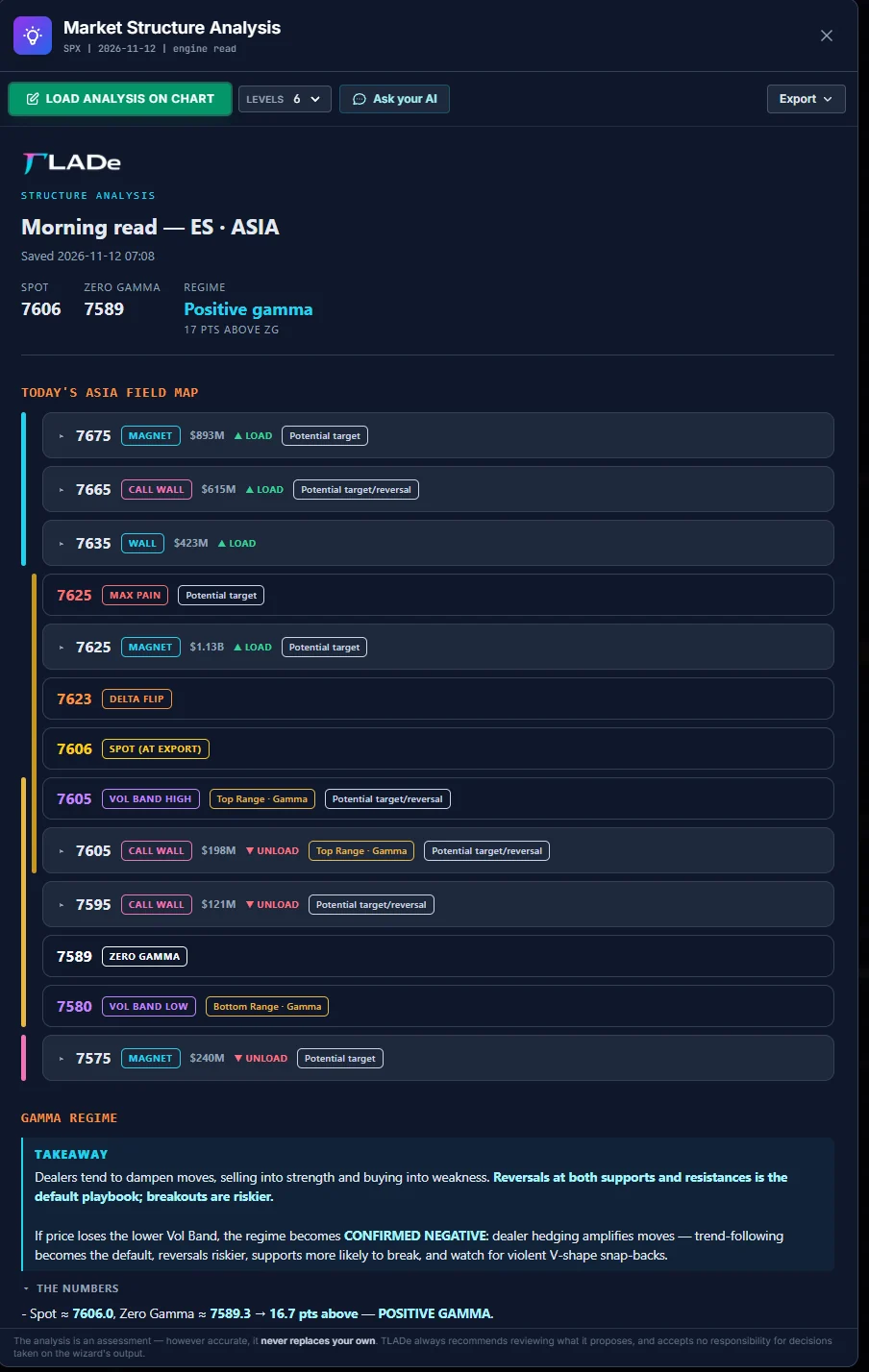
The Analysis Wizard reads the live snapshot for you and writes the session plan in plain words. One click draws it on the chart.
What the read tells you.
- Where you are. Spot, Zero Gamma, the gamma regime and the distance between them.
- The field map of the session. Every level in play with its role (wall, magnet, max pain, delta flip, vol band), its gamma in dollars, and whether dealers are loading or unloading it.
- What to expect at each level. A potential target, a likely reversal, or the edge of the range.
- The takeaway. The default playbook for the regime, and the level that would change it.
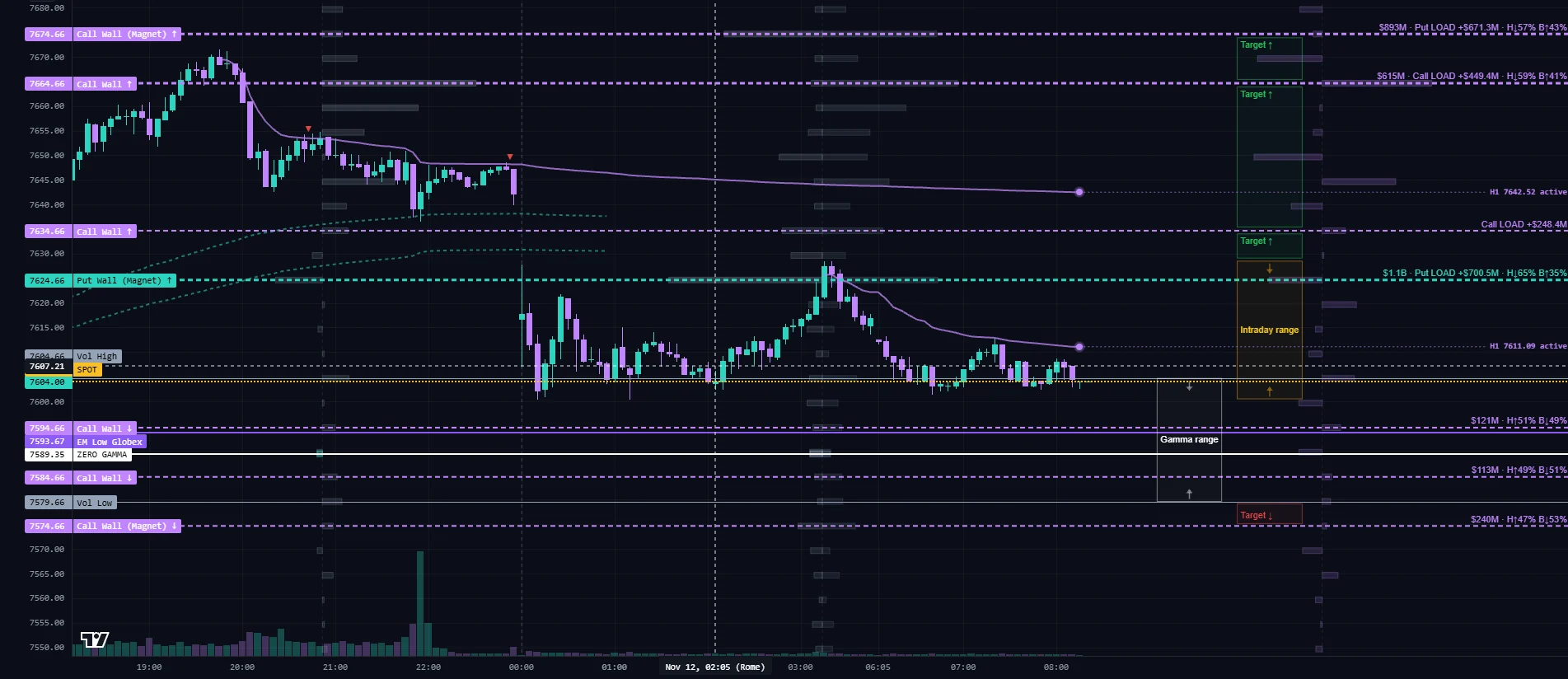
On the chart the range is shaded and every level carries an arrow: reversals at the walls, targets at the magnets. Choose how many levels the read covers, save it, export it, or ask your own AI about it.
Built right into the terminal. Exported to your platform.
Built right into the TLADe terminal — and exported to your existing trading platform when you want the same signals over your own charts.
Essential indicator suite
An opinionated, curated selection. Each one earns its place by either anchoring the TLADe Playbook (where to look) or by surfacing the most significant confluences (when the setup is real).
Bring your own broker data.
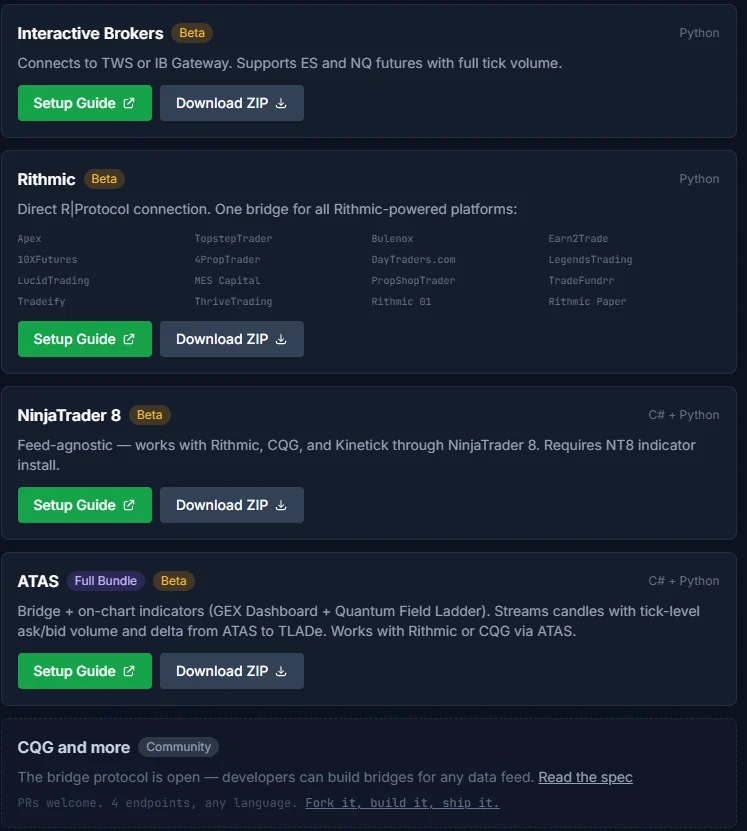
No double feed. No extra subscription. TLADe reads the data already streaming into your trading platform — and overlays GEX & market structure on top of your candles. Everything stays on your machine.
- Interactive Brokers: TWS / IB Gateway, ES and NQ
- Rithmic: Apex, TopstepTrader, Bulenox and any Rithmic account
- NinjaTrader 8: any data provider connected to NT8
- ATAS: candles plus ask/bid volume and delta
Risk Calculator.
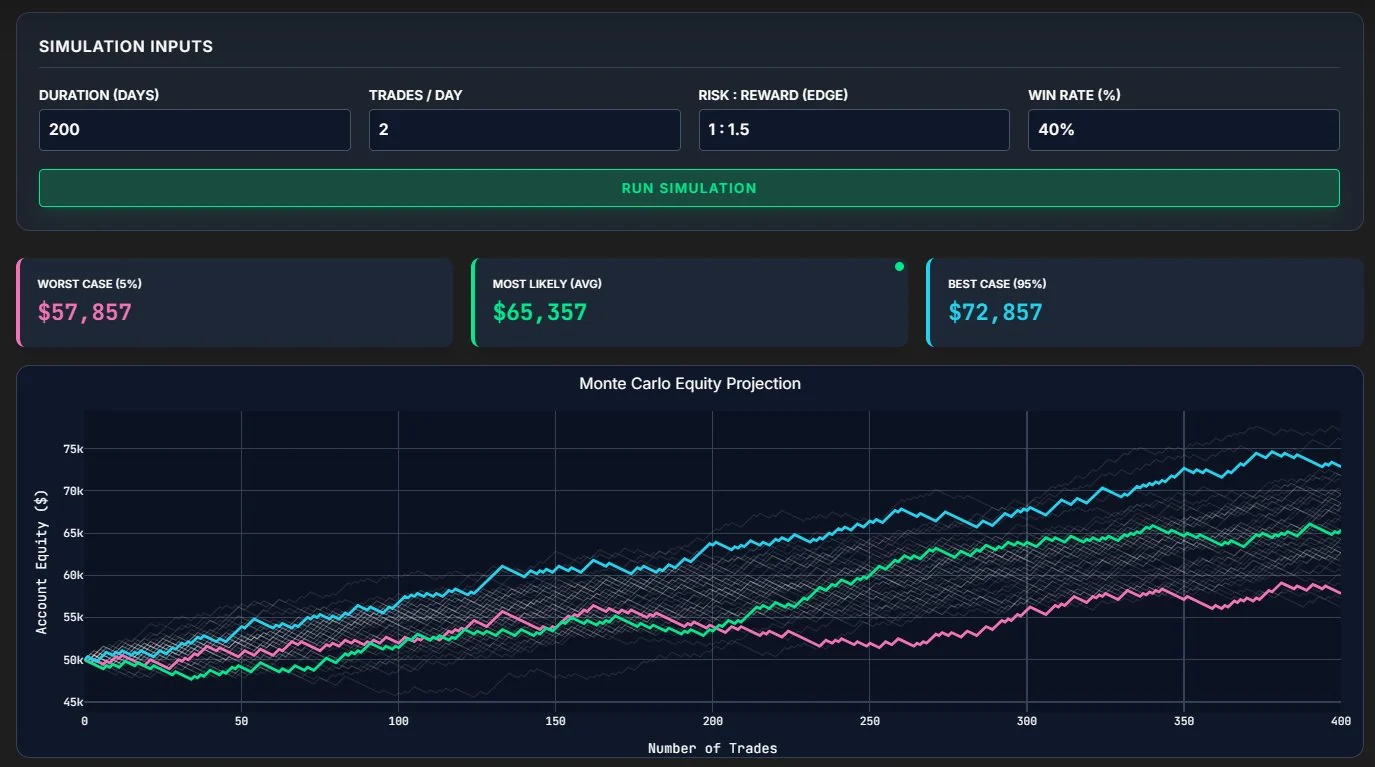
Position sizing grounded in probability theory. Maximum Losing Streak protection ensures you survive worst-case sequences, while volatility-derived stops adapt to current market conditions. Dynamic sizing scales with your edge score — the better your discipline, the more capital you deploy.
Trading is a cognitive sport. TLADe adapts to your mental load.
Panels dock, float, fold and resize. Keep everything on one page or switch to tabs, and pick the skin that suits your session.
Choose your access.
Same powerful features across all plans. Different commitment levels.
Free
No credit card.
- Full interface and every panel
- ES, NQ, SPX, NDX, SPY, QQQ
- Platform indicators
- Data three days behind
- No live sessions, archive or bridges
Monthly
Cancel anytime.
- 6 live session updates a day
- 60-day archive and replay
- End-of-week and 5DTE forward levels
- Real-time bridges: IB, Rithmic, NT8, ATAS
- Everything in Free
Yearly
About $8.25 a month, 17% less.
- Everything in Monthly
- Every upgrade released during the year
Prices exclude EU VAT where applicable. Payments by Stripe.
Before you switch to structure.
What is GEX (gamma exposure)?
GEX measures how much dealers need to hedge as price moves. With positive GEX, dealers sell rallies and buy dips, which steadies price. With negative GEX, they buy rallies and sell dips, which amplifies moves. It is the force behind how price behaves at key levels.
What is Zero Gamma?
The price where dealer gamma flips from positive to negative. Above it, dealers dampen volatility and mean reversion is the default. Below it, they amplify volatility and trends carry further. It is the most important level in the terminal.
What are call walls and put walls?
A call wall is the strike with the heaviest call gamma and tends to act as resistance; a put wall is the strike with the heaviest put gamma and tends to act as support. Dealers hedge most there, so price tends to react.
What is the difference between walls and magnets?
Walls are strikes where gamma is dominated by one side, so dealer hedging pushes in one direction; if price breaks through, most dealers hedge the same way. Magnets are strikes where calls and puts are more balanced, so hedging pressure is two-sided.
Which tickers does TLADe cover?
The S&P 500 complex (ES, SPX, SPY) and the Nasdaq 100 complex (NQ, NDX, QQQ), with every engine on both.
Does it work for scalping, or only for intraday swings?
Both. Price reacts at the same nodes whether you hold for two minutes or two hours. A scalper enters at a wall and takes profit at the first node; a swing trader enters at the same wall and holds to the magnet.
How do I cancel?
From Manage Subscription in the Plans tab of the terminal. You keep access until the end of the period you paid for.
“I am absolutely thrilled with the platform. Elevated my trading to a new level.”Krzysztof, subscriber
“I love the interface design and intuitive way I can access the data.”
“Haven't seen anything like this before. You did an awesome job.”
Structure creates clarity.
Your discipline creates outcome.
Keep trading — or start TLADing.